

How to Stop a Dog Pulling on the Leash
Dogs pull because pulling works. Each time he leans into the leash and you follow, he learns that a tight leash gets him where he wants to go. To stop it, make pulling stop working and make a loose leash worth his while. The steps below are simple, kind and easy to keep up on every walk.
The short answer
- Stop walking the moment the leash goes tight.
- Reward him when the leash is loose.
- Turn and walk the other way when he charges ahead.
- Keep practice short and use the same cue every time.
- Let him burn off energy before you head out.
- Clip the leash to a front-clip harness, not his collar.
Why dogs pull on the leash
Most dogs simply walk faster than we do. Outside is full of smells, other dogs and squirrels, and he wants to reach them all. If pulling has ever got him there, he will keep trying it.
Where the leash clips matters too. On a collar, or on a ring at the back of a harness, he can lean his whole body into the leash and drag you along. That is why the right gear and a few good habits work best together.
7 steps to stop your dog pulling on the leash
1. Stop when the leash goes tight
The moment he pulls, stand still. Don't tug back and don't scold him. Wait until the leash goes slack or he turns to look at you. Then walk on. He learns that pulling stops the walk and a loose leash starts it again.
2. Reward a loose leash
Catch him doing it right. When he walks beside you on a soft leash, praise him and give him a small treat at your side. Keep a few soft treats in your pocket so you are always ready.
3. Change direction
If he charges ahead, calmly turn and walk the other way. He has to follow you, and when he catches up, praise him. Do this a few times and he starts keeping an eye on where you are going.
4. Keep practice sessions short
Practice for five to ten minutes at the start of a walk, while you both have patience. Then enjoy the rest of it. Short sessions on every walk teach more than one long, frustrating one.
5. Use the same cue every time
Pick one simple phrase, such as "with me" or "let's go," and use it every time you set off or change direction. Ask everyone who walks him to use the same words and the same rules.
6. Burn off energy before the walk
A dog bursting with energy pulls harder. Play a few minutes of fetch or tug in the yard before you leave. A calmer dog finds it much easier to walk nicely.
7. Clip the leash at his chest
A front-clip harness changes what happens when he pulls. The leash attaches on his chest, so when he surges forward, the leash turns him back toward you instead of letting him lean into it. Pulling stops paying off, and every step above gets easier.
How a front-clip harness helps
The SafeWalk No-Pull Dog Harness is built around a fixed front ring stitched into the chest strap. It stays centered on his chest and turns him back toward you every time he pulls. Pulling gets him nowhere, and that means no more pulling.
It also has:
- A back ring for relaxed walks once he is walking calmly.
- A top handle to hold him close at crossings or when another dog passes.
- Padded, breathable mesh that sits comfortably on his chest.
- Reflective stitching for early-morning and evening walks.
- One side buckle and four adjustment points for a snug fit.
Common mistakes to avoid
- Yanking the leash. It startles him and teaches him nothing useful. Stand still instead.
- Letting pulling work "just this once." If it sometimes gets him to the tree, he will keep trying.
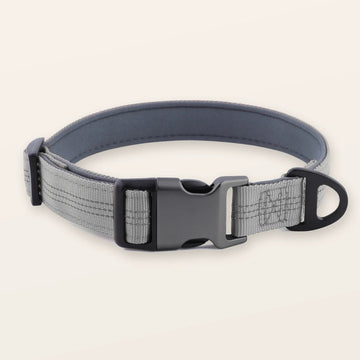
- Clipping the leash to his collar. A collar puts every pull on his throat. A harness takes it on his chest and shoulders.
Getting the size right
A harness only works if it fits. SafeWalk is sized by weight: XS 4–13 lb, S 14–24 lb, M 25–44 lb, L 45–74 lb and XL 75–132 lb. If your dog is deep-chested or stocky and close to the line between two sizes, go up a size. Our harness fit guide walks you through it.
Fit it snug, so it stays centered on his chest and doesn't twist, with room to slide two flat fingers under the straps. Walking a big dog? See what to look for in a no-pull harness for large dogs.
SafeWalk comes in 8 colors, and every harness includes 3 free gifts: two personalized name tags with your dog's name and your phone number, a clip-on poop-bag dispenser and a 15-bag roll. It also comes with a 60-day money-back guarantee, so you can try it on your own walks.
Frequently asked questions
How long does it take to stop a dog pulling on the leash?
A front-clip harness works from the first walk: the fixed front ring turns him back toward you each time he pulls. The loose-leash habit builds with practice. Keep sessions short, keep the rules the same and practice on every walk.
Is a harness or a collar better for a dog that pulls?
A harness. A collar puts the pull on his throat. A harness puts it on his chest and shoulders. Clip the leash to the harness, not the collar.
Do I need to train my dog before using a no-pull harness?
No. You can use it on your very next walk. The steps on this page make walks calmer still, and they work best alongside the harness.
Which ring should I clip the leash to?
Use the front ring on his chest while pulling is the problem. Once he walks calmly, you can switch to the back ring for relaxed walks.